
Immortelle
Any forever is a lie.
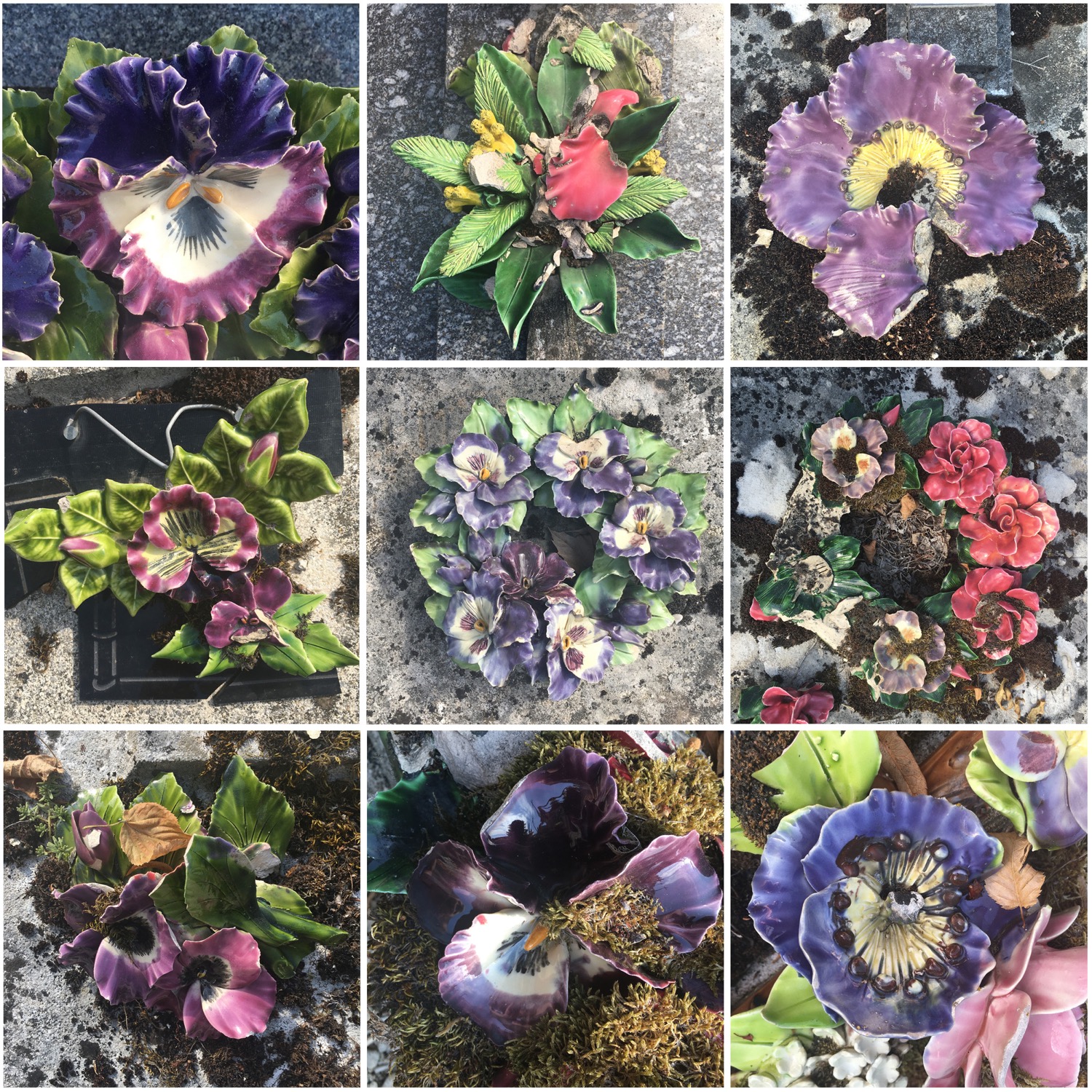
In thinking about mourning practices and particularly the temporality of eternity*, I have been reminded of the ‘Immortelles’ that I saw in the graveyard of Église Saint-Vorles in Châtillon-sur-Seine in Burgundy.

The tending of graves traditionally relies on kinship ties. If you have someone that wants to make the weekly trip to the cemetery, providing fresh flowers at each visit, all well and good, but what happens if you don’t?
The ‘Immortelles’ come in different varieties and longevities: fabric, beaded wire, plaster and ceramic, now sometimes plastic. Anything to outlive nature. In the graveyard of Église Saint-Vorles they are almost exclusively ceramic wreathes.

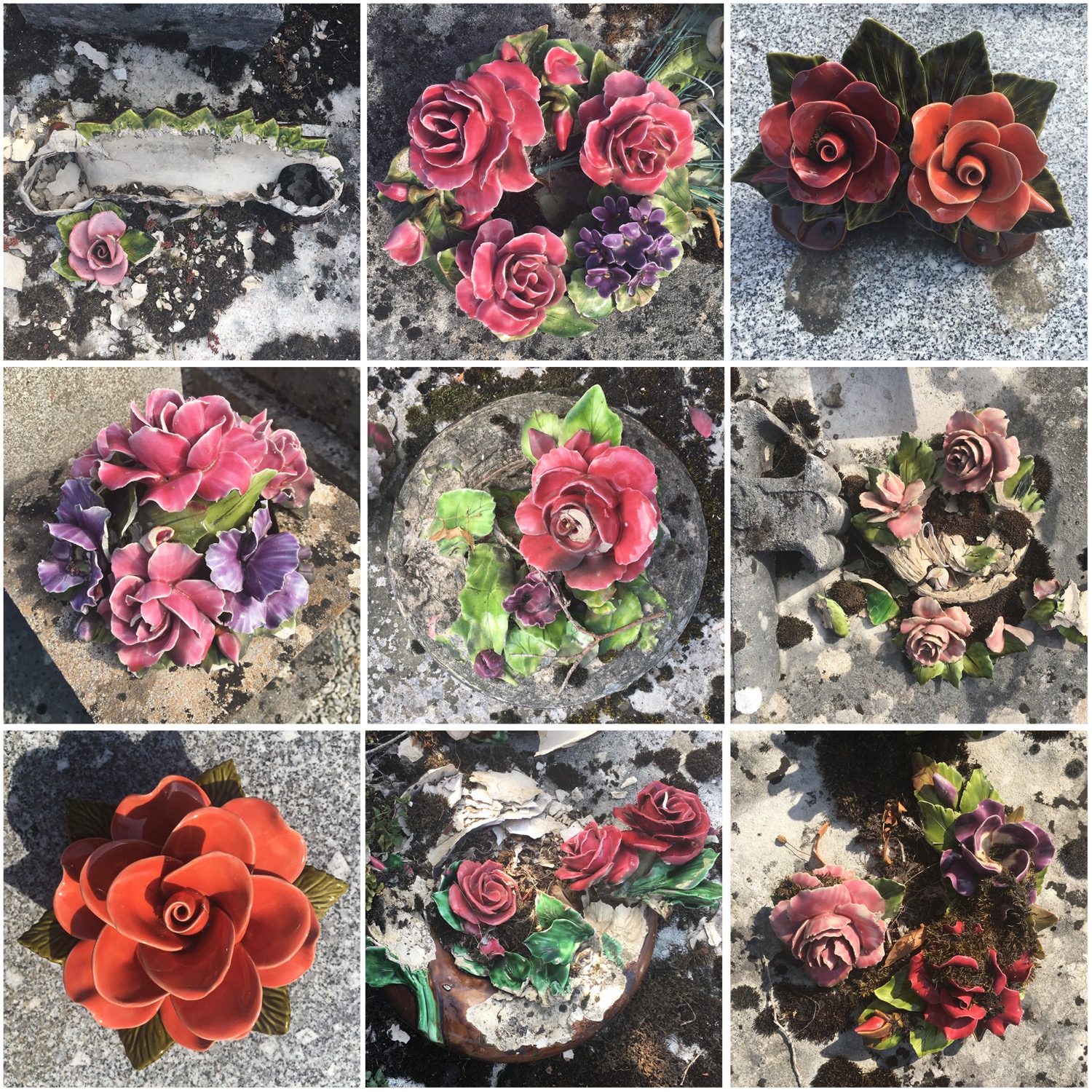
On the one hand they mark a long-lasting respect for the deceased and on the other they relieve the living of regular trips to the cemetery, and so then, perhaps, less respect after all, or at least less bother. A higher initial expense for longer indemnity against accusations of discourtesy, with the possibility of maintaining distance. In any case they decay in a far more conspicuous and brutal way than the organic originals upon which they are modelled. When they chip, break and crumble they do so violently. As mosses, lichens and grasses, creep in between their glazed petals and leaves, we are reminded that life will find a way.
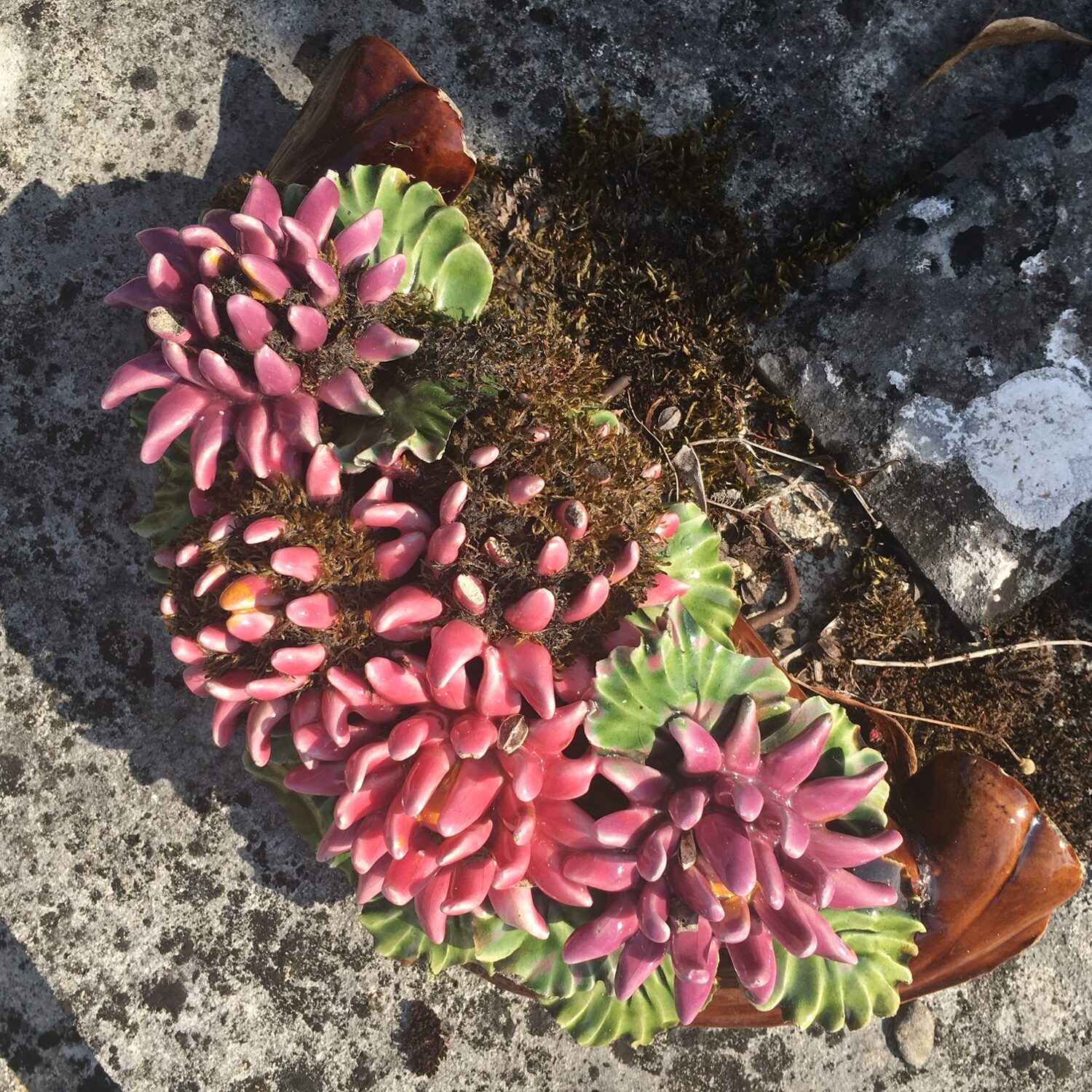
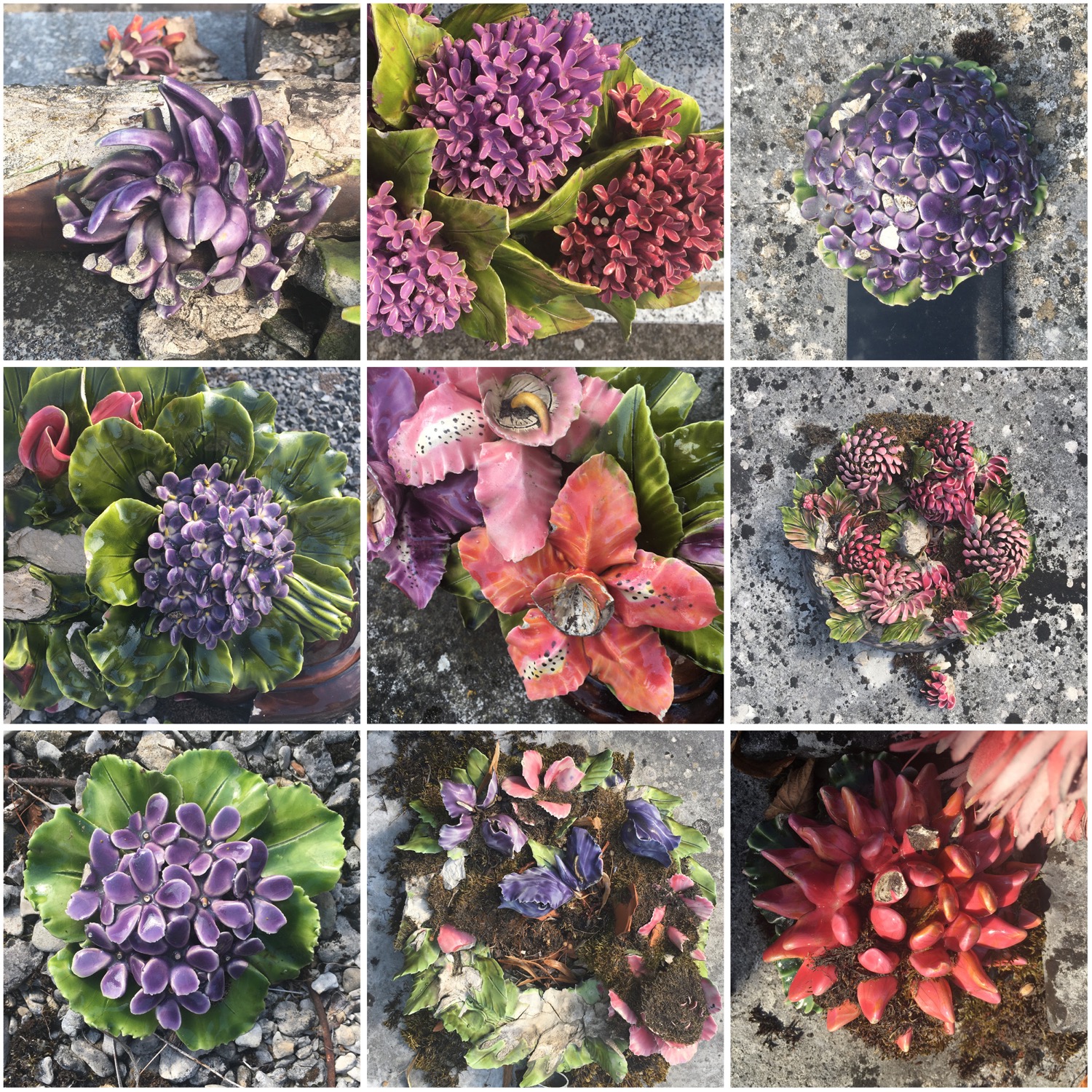
The death of the immortal. A reminder that forever is a lie.
*I have been thinking about rites of the dead as part of the research I am making with Sibylle Peters for a new work about how reconceptualising the afterlife might give renewed meaning to the living.