
Private Views
For a few happy years I lived in the market town of Wirksworth in the Derbyshire Dales of the East Midlands. Each autumn the town hosted the Wirksworth Festival, when residents opened their front doors to the public and turned their homes into miniature galleries. Living rooms and kitchens became exhibition spaces. Visitors would lean in to admire a painting or a ceramic bowl, then find themselves equally absorbed by the wallpaper, the mantelpiece, or an unexpectedly adventurous shade of kitchen tile. Whispered appraisals floated through the rooms: a debate about flooring, a speculation about storage solutions. As a host, I became acutely aware that my choice of curtain fabric or lamp placement was being judged as much—perhaps more—than the art I was meant to be exhibiting. The festival was ostensibly about art, but it was simultaneously about sanctioned nosiness, a collective act of aesthetic snooping.
Something of this feeling—between art, architecture and interior design, leaping into an imaginative rendering of how others live—was at the heart of my experience of Kimsooja’s To Breathe—Sunhyewon, a site-specific installation at Sunhyewon (선혜원) in Seoul, South Korea.
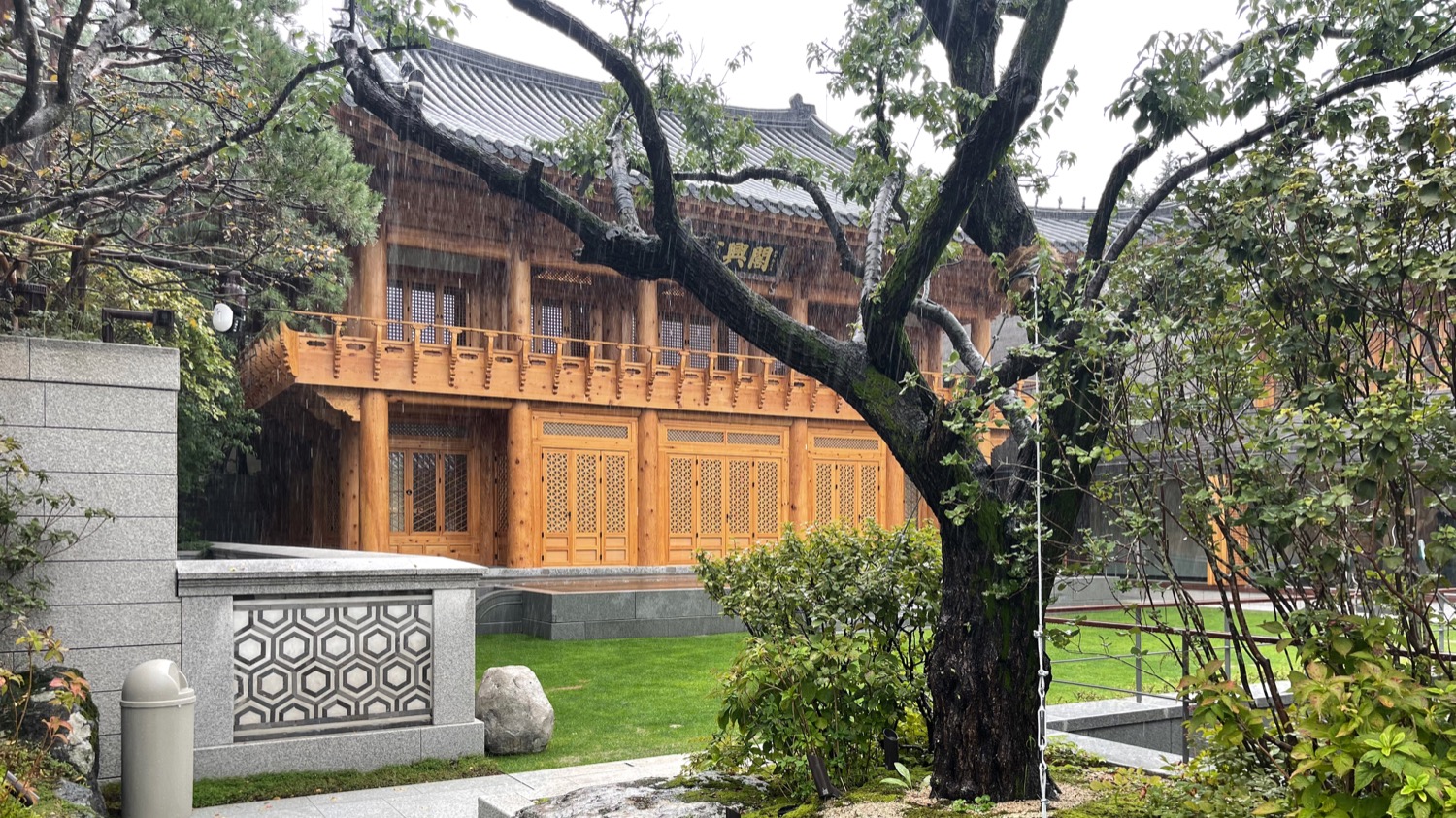
A short distance north of Gyeongbokgung Palace (경복궁 — the first royal palace of the Joseon dynasty, established in 1395), Sunhyewon is a new art space in the former private home of Chey Jong-gun (최종건), the founder of the SK Group, a “chaebol” (Korean family-owned business) and one of the largest conglomerates in Korea. Built in the 1960s the architecture is an incredibly well-balanced blend of traditional royal hanok pavilion (leaving the wood to breath unadorned) and clean subterranean modernist spaces with white walls.
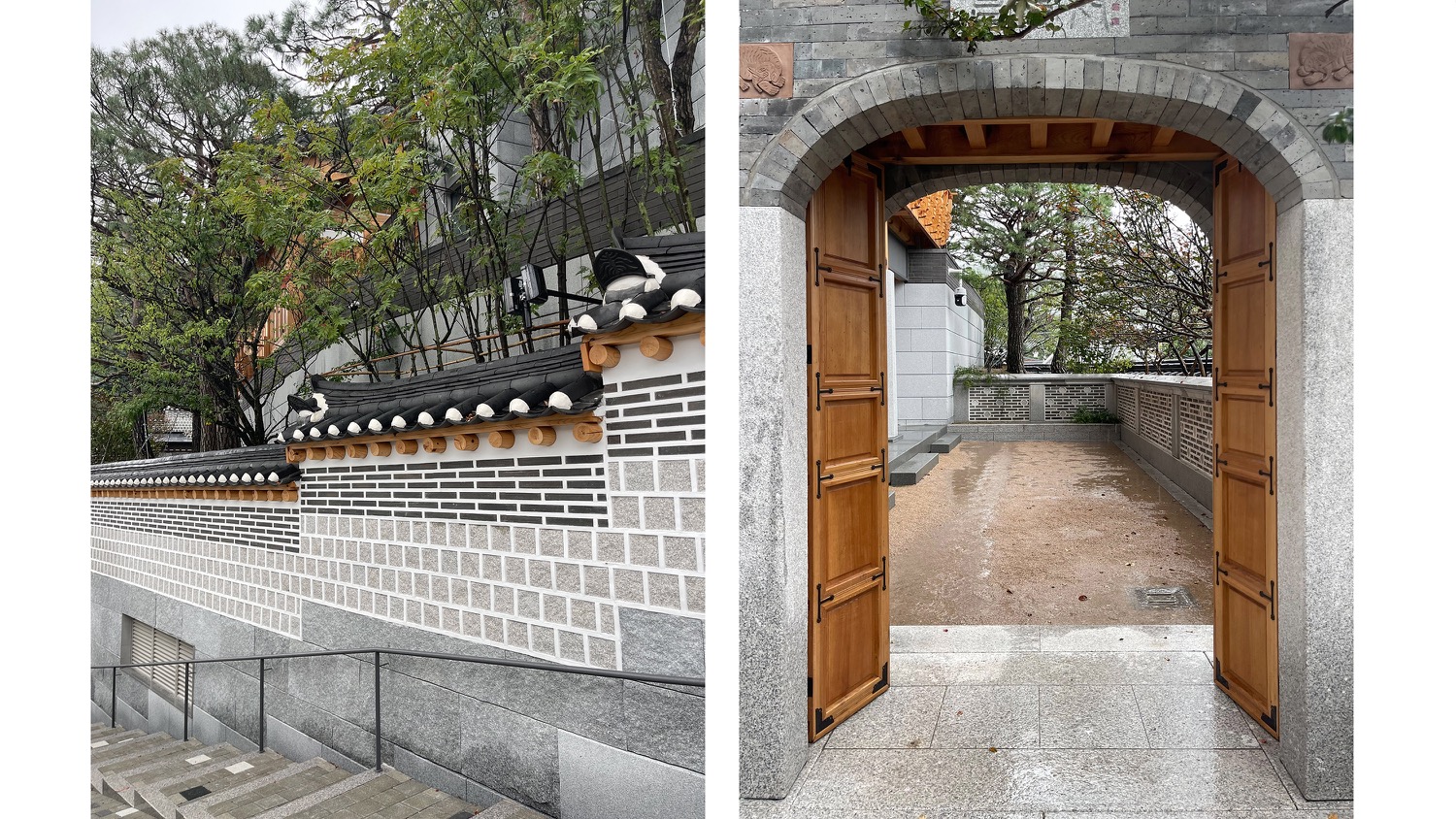
The residence is in fact a series of buildings, traditional and modern, on rising ground. When I arrived (a little early for the first reserved visit of the day) giant steel doors in the side of the hill slid open and a maintenance vehicle left what was clearly a substantial underground parking lot. Inside, the compound showcases exceptional craftsmanship and an amazing harmony of radically different traditions and techniques.

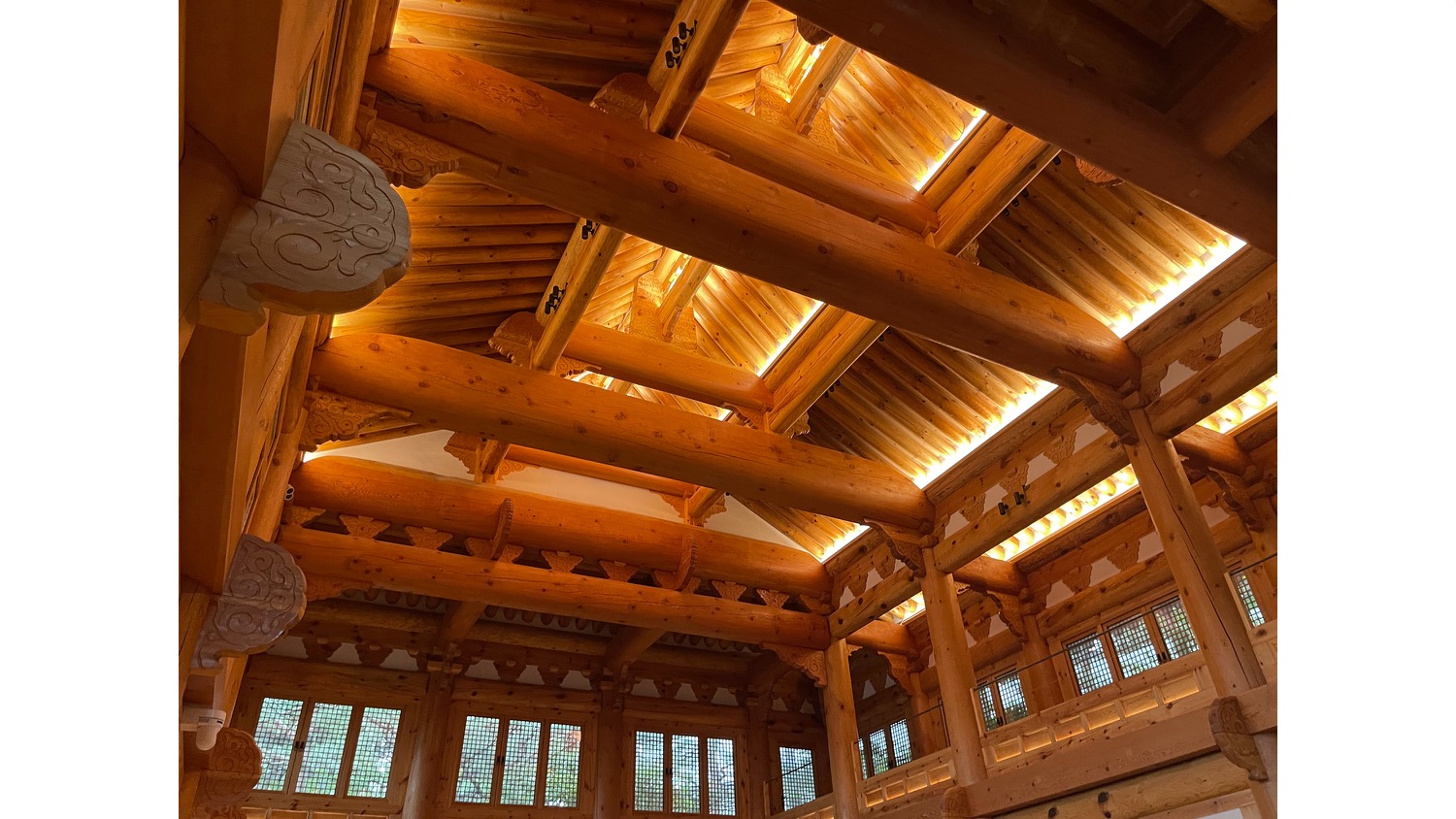
The site has recently reopened as SK Group’s “research institute” (researching what, it is not clear to me) and it is inaugurated with an exhibition programme: “Sunhyewon Art Project 1.0.” curated by PODO museum, of which Kimsooja’s show is the first.
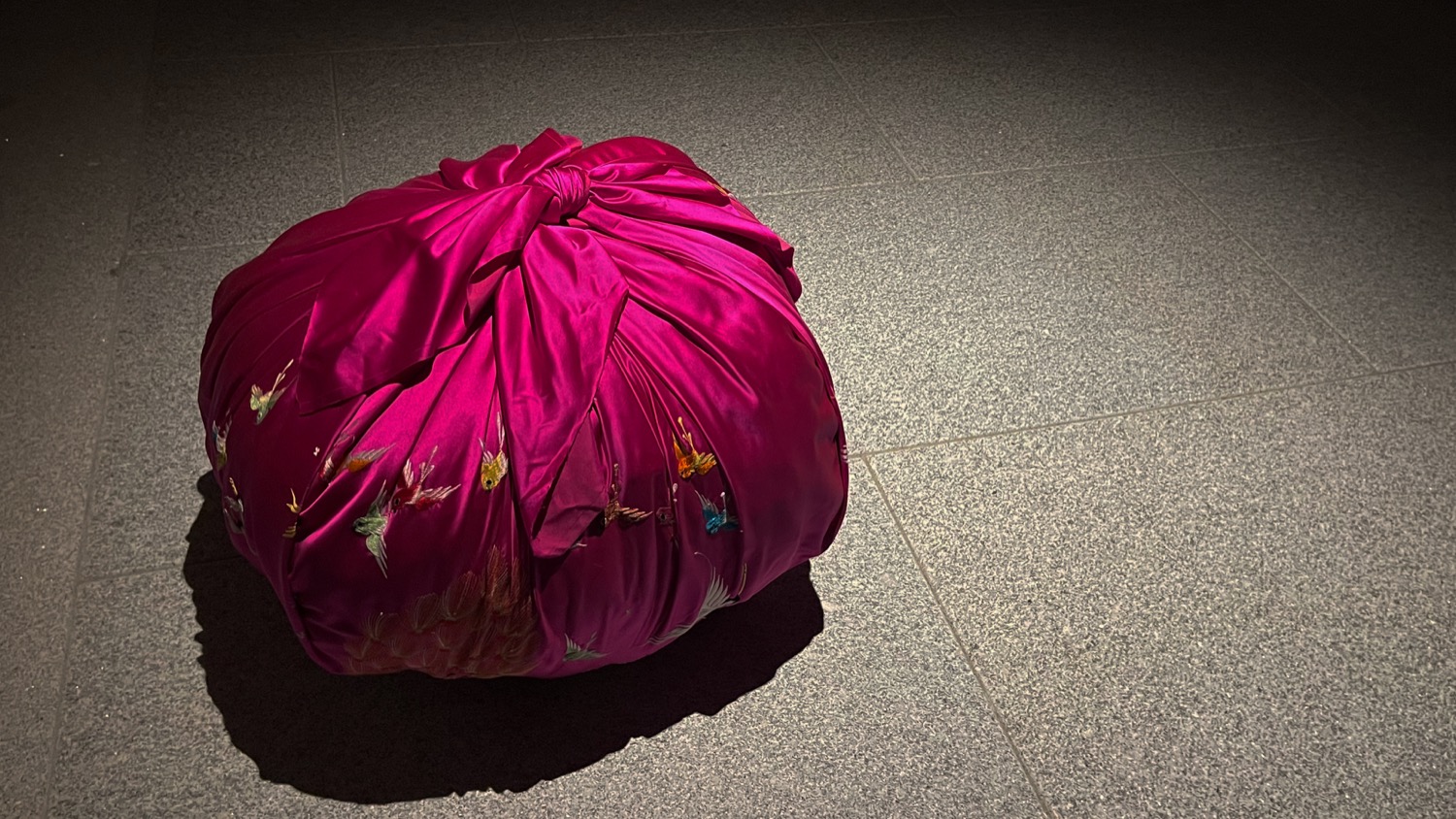
Kimsooja (b.1957) is an internationally renowned conceptual artist with an extensive list of high-pedigree museum collaborations. Her works traverse disciplines. It was through her early performances that I first got to know her practice. Her sculpture and installation works also privilege performance, either by referencing their making through the acknowledgement of their creation (as in for instance the mark making of Sewing into Soil: Invisible Needle, Invisible Thread, 2023 shown as part of this exhibition) the acknowledgment of the absent body (for example, Bottari, 2022 a repetition of her signature work; bottari is the Korean word for belongings bundled up and wrapped in a giant cloth—a bedspread or similar—when heading out on a journey) or when the work is completed by the audience (as in To Breathe—Sunhyewon, 2025, the central work of this show at Sunhyewon).
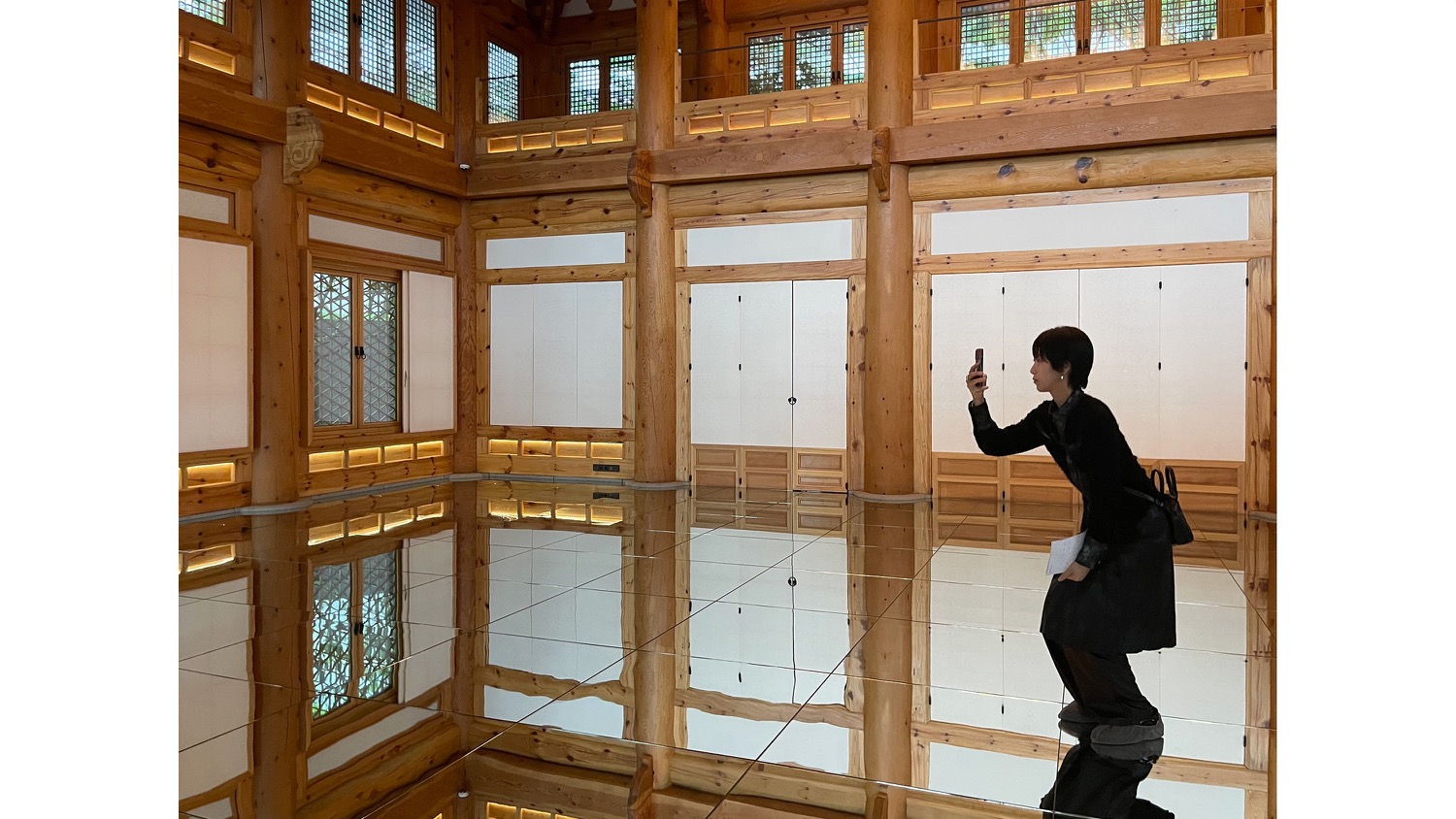
In To Breathe—Sunhyewon, 2025, Kimsooja makes a simple gesture she has made elsewhere: she covers the floor in mirrors. Kyongheunggak, the hanok of the Sunhyewon complex, is therefore doubled, and visitors find themselves suspended between two realities. The accompanying interpretation makes bold claims for this minimal intervention:
“The mirror dissolves boundaries between past and present, interior and exterior, self and other—positioning the viewer’s body as a vertical axis that completes the space. […] Between light and shadow, presence and absence, the viewer encounters their own being suspended between life and death, self and other, reality and virtuality.”
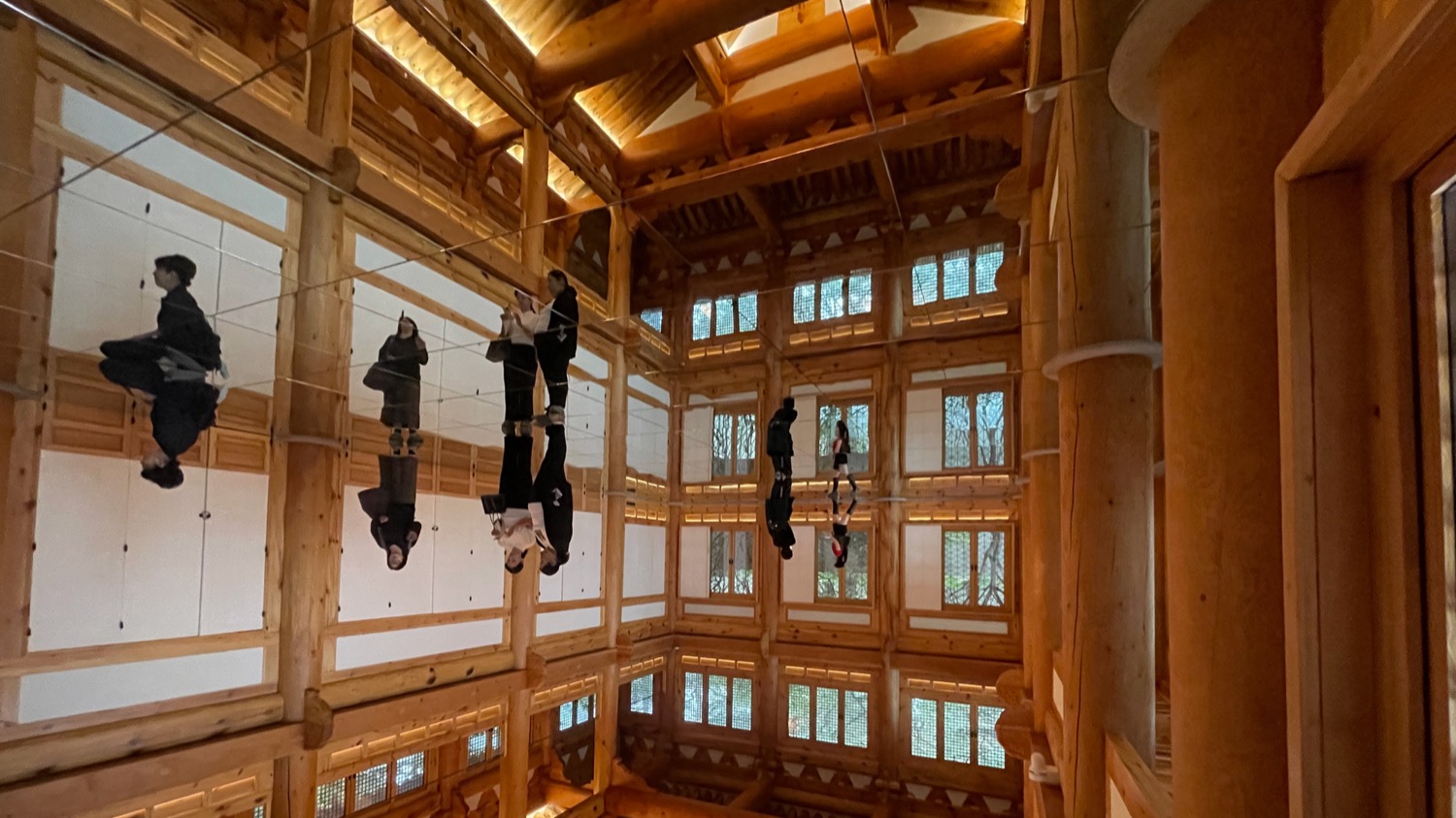
Bold as these claims are, they also reflect something of my experience being the space. There was a strange and wonderous vertiginous suspension between worlds, histories and existences, standing in a kind of non-time, of the recent history of the space and its long-standing historical precedents. It was surprisingly moving while also being an inevitable opportunity for selfies.
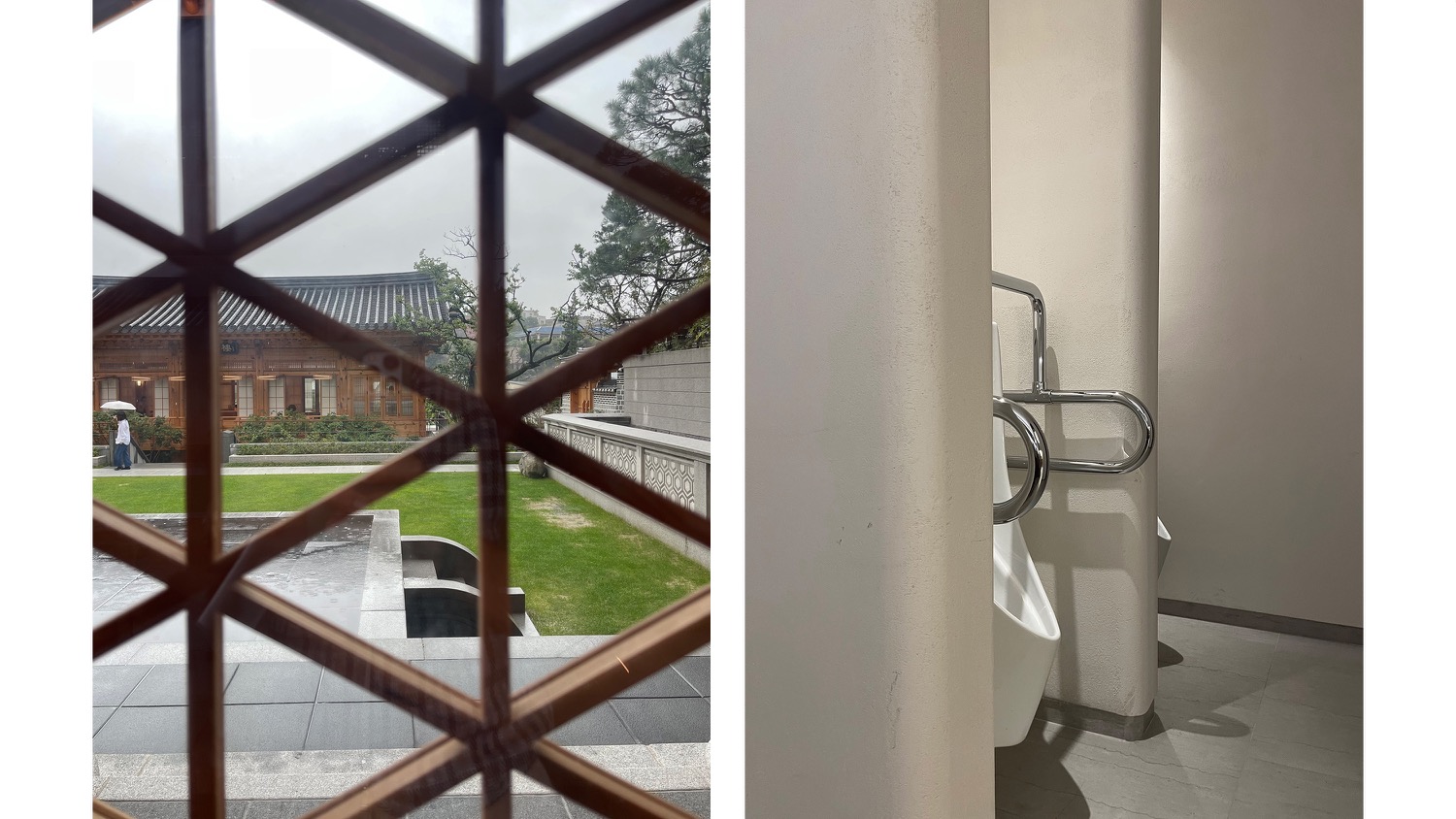
And almost at the same time, wandering around the complex, into the other exhibition rooms—even, maybe especially, the seamless design of the men’s toilet—I couldn’t help but imagine the life of Chey Jong-gun, the man who commissioned this incredible space; a space at once immeasurably grand and discrete, holding together cultural histories, modernity and the future. It was a highly ambivalent feeling, of course, the acknowledgement of a refined taste, of many artistic and design collaborators who had excelled, but above all of the possibilities of unimaginable wealth, wealth set against the extreme poverty of a country reeling (still reeling in the North) from the after-effects of the Korean war. There are many ways to tell this story.
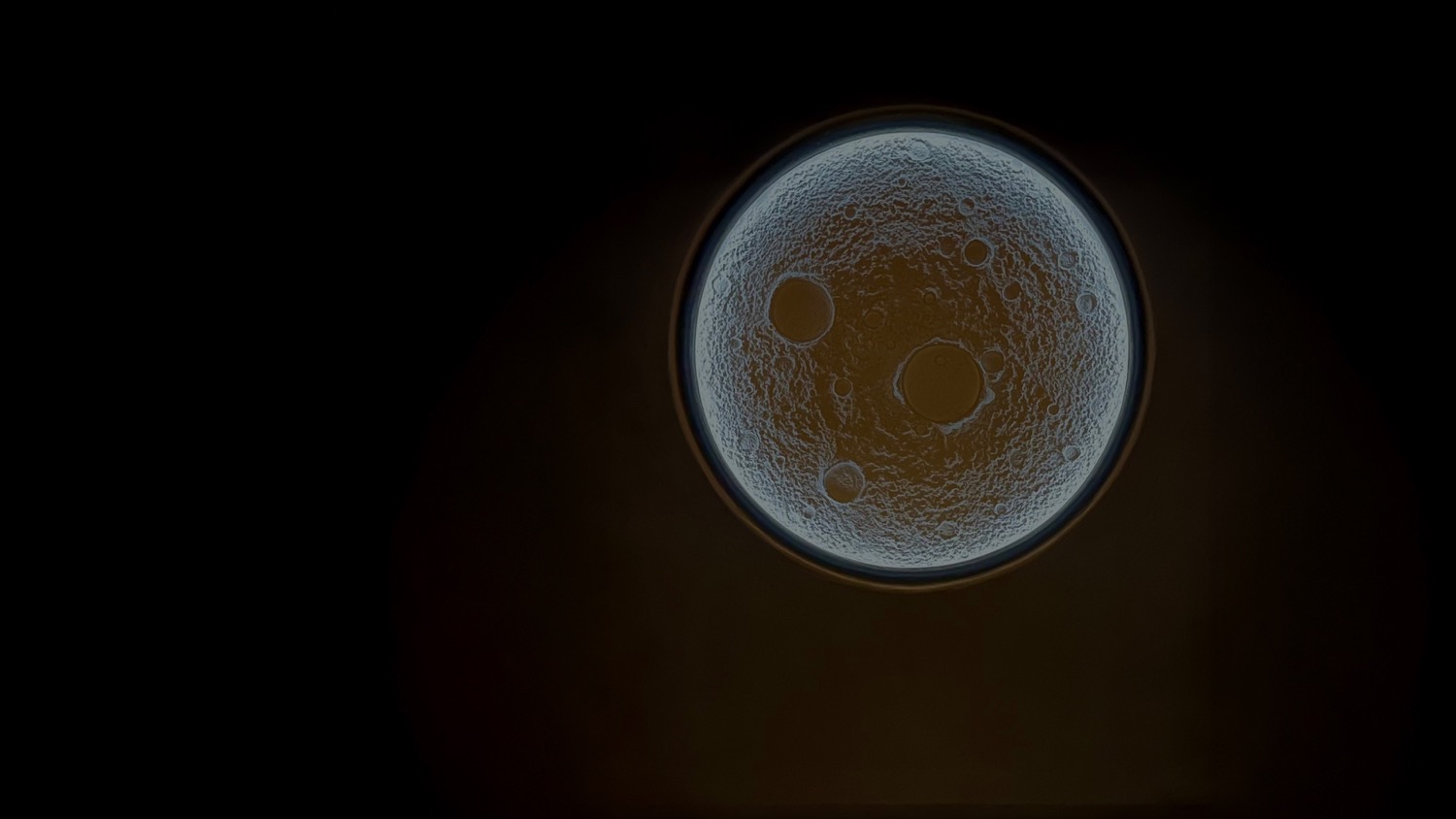
I stepped into the elevator. Inside, a small, self-contained cosmos: a glowing moon rose and sank as the floor numbers ticked past. It was unattributed, but I took it as part of the conversation. Everything here breathes: even the lift, it seems, has a celestial ambition.
Chey Jong-gun died from lung cancer in 1973, aged just fifty-two. The house he built as a monument to arrival became, within a few years, a memorial. Walking through its restored corridors today, now open to strangers like me, I felt both gratitude and unease. It is a privilege to step into another person’s private world, to glimpse their taste and their ambition, to feel the presence of their ghost. But the invitation also makes visible the gulf between lives — between the domestic and the dynastic, between my curiosity and their generational wealth. At Wirksworth or in Seoul, the impulse is the same: to peek inside, to measure ourselves against someone else’s taste, to imagine another life from the arrangement of rooms. Whether it’s a neighbour’s kitchen or the hanok of a chaebol founder, interiors tell stories we half recognise and half invent.