
A Matter of Life and Death
As part of the recent Powell and Pressburger season at BFI Southbank in London there were several screenings of a remastered print of the 1946 classic A Matter of Life and Death.
Shot down in a bombing raid towards the end of the war, British pilot Peter Carter (David Niven) somehow cheats death and falls in love with American radio operator June (Kim Hunter) only for heaven to realise that they have made a mistake and that Peter has missed his allotted time to pass from this world to the next. Negotiations begin between heaven and earth as to what should happen next, culminating in a giant celestial court in which the prosecution and defence put forward their case: Should Peter Carter be granted or denied further time on Earth?
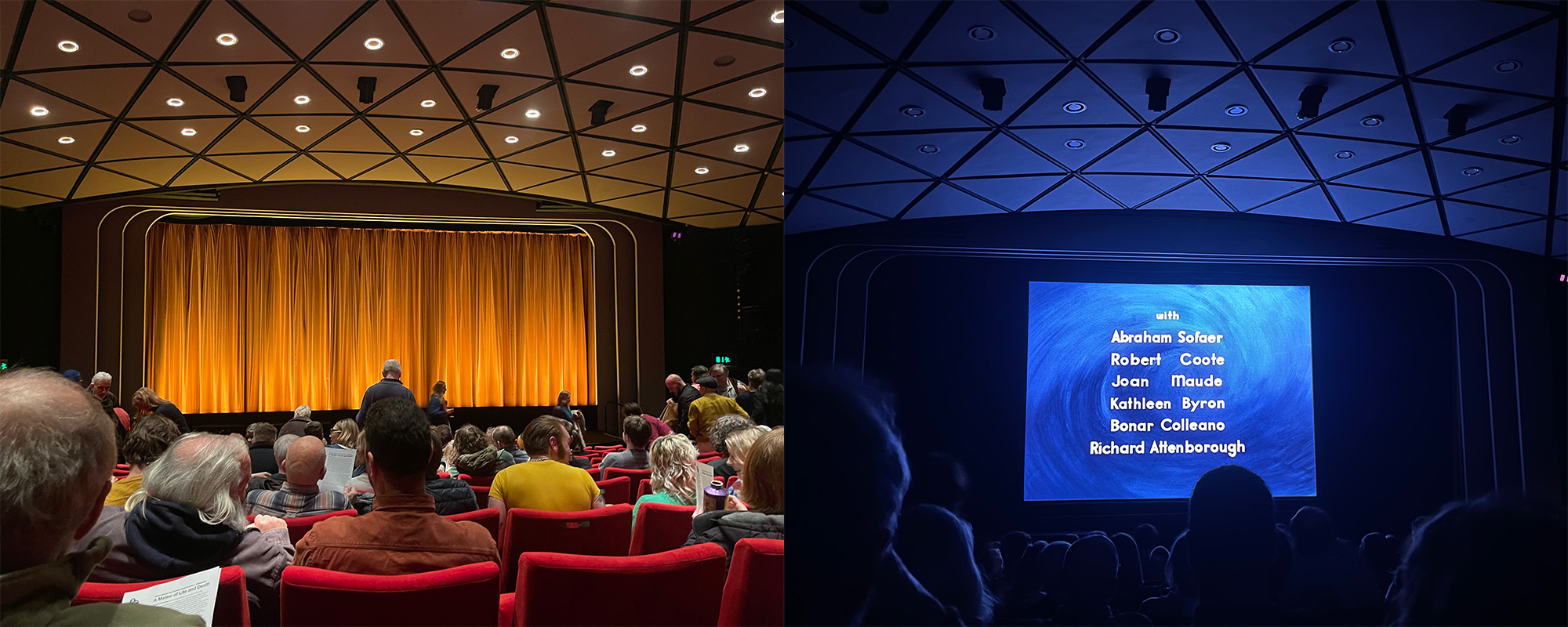
I have seen the film several times before but never yet in the cinema. It’s a good’un, often on lists of the top films of all time. Apart from its general excellence, it also has a very particular sort of role – the heavenly judge – played by my great-uncle Abraham Sofaer (my grandfather’s older brother).
Although our lives overlapped, I never met Uncle Abe. He was a mysterious phantom role-model for me. He died in California in 1988 (when I was still a schoolboy) after a life of acting, first on the English stage and later in Hollywood.
Born in 1896 in Rangoon (British Burma; now Yangon, Myanmar) Abraham Sofaer was the eldest son of my great-grandfather Isaac Sofaer, who travelled as a child from his native Baghdad and set up shop (literally) as a merchant. In the picture below you can see Isaac in his Arabic thawb, the long-sleeved ankle-length robe, while Abe sits in a sort of sailor-suit on the recently delivered crates of Danish Tuborg beer. (My grandfather is peeking his head over the balcony above.)
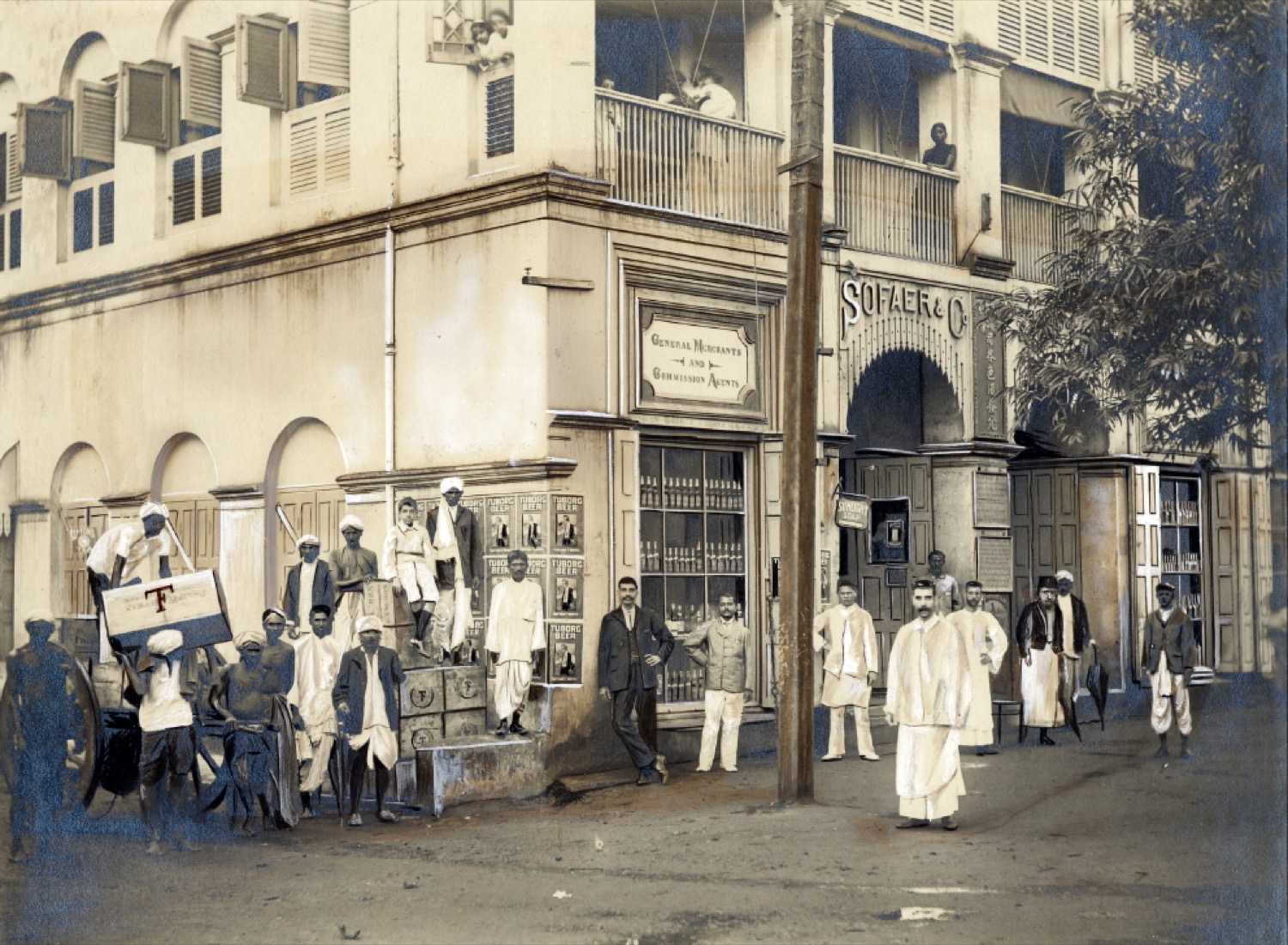
There are all kinds of peoples and languages in this photograph: indigenous Burmese, Indian labourers, the Iraqi Jews of my family, the ayas who cared for them, the Chinese sign on the right of the shopfront to entice visitors from the East, and of course English, the language of Empire.
At its core, A Matter of Life and Death is about UK-USA relations, strained in the aftershock of the second world war. Its propaganda is in the love between the hero and the heroine and their willingness to die for each other.
Although naturalised as a British subject and ultimately becoming an American citizen, Abraham Sofaer is placed as the heavenly judge between the British and Americans because he does not pass as either of these. He is ‘unplaceable’, a creature from somewhere else. His Empire English is a bit too good, his pronunciation a bit too well rounded. He is neither white nor black, nor any easily identifiable race.
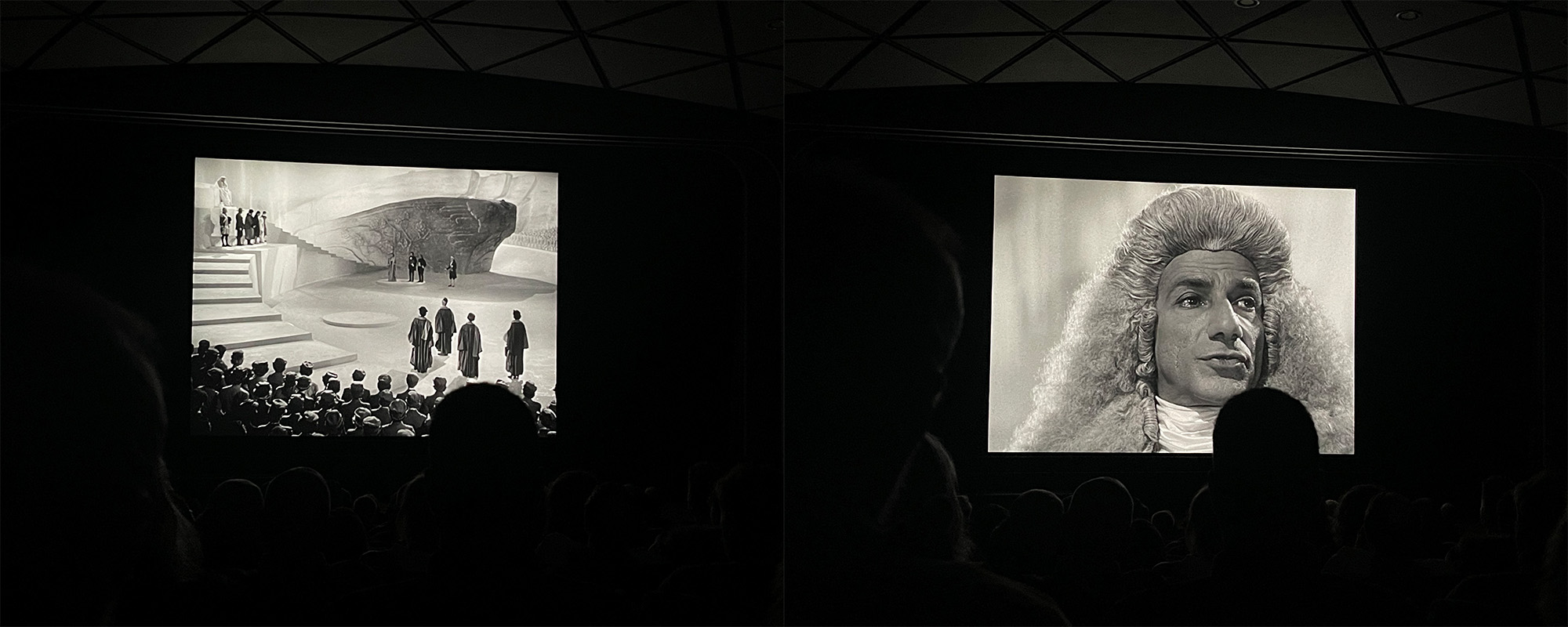
His ‘otherness’ is emphasised when the prosecution demands a jury of American citizens. As they line up in all their archetypes (the French American, the Dutch American, the Russian American, the Asian American, the African American, the Irish American) the judge sits above them all, cut off from origin, heritage and belonging, a citizen of nowhere.

A Matter of Life and Death. Allstar Picture Library Ltd. Alamy.
Abraham Sofaer was a ‘character actor’ (a misnomer if ever there was one; as if other actors are not playing characters) and was often cast as an unplaceable other. Haji, master of all genies (I Dream of Jeanie); Appuhamy, the sinister servant who is eventually trampled to death in a stampede (Elephant Walk); and many racially ambiguous others, almost exclusively given only first names: Hassid, Swami, Comancho, Marabout, Sobram, Tamend, Shahzi, Timaui, Fadhil, Alou. Perhaps the apogee of this tendency to misplace him was his disembodied appearance on Star Trek as a representative of the Thasians, a non-corporeal race with psychic powers who exist only as holograms!
It is an uneasy pleasure to watch him on screen, a mixture of recognition and regret; it reinscribes my own sense of unbelonging but at the same time offers ‘art’ as a way out. What made a great difference at the BFI Southbank was that I went with my nephew, who was, for the first time, watching his great-great-uncle on the silver screen. In sharing this moment with him, I felt part of a continuum which extends back and forward further than I can see.