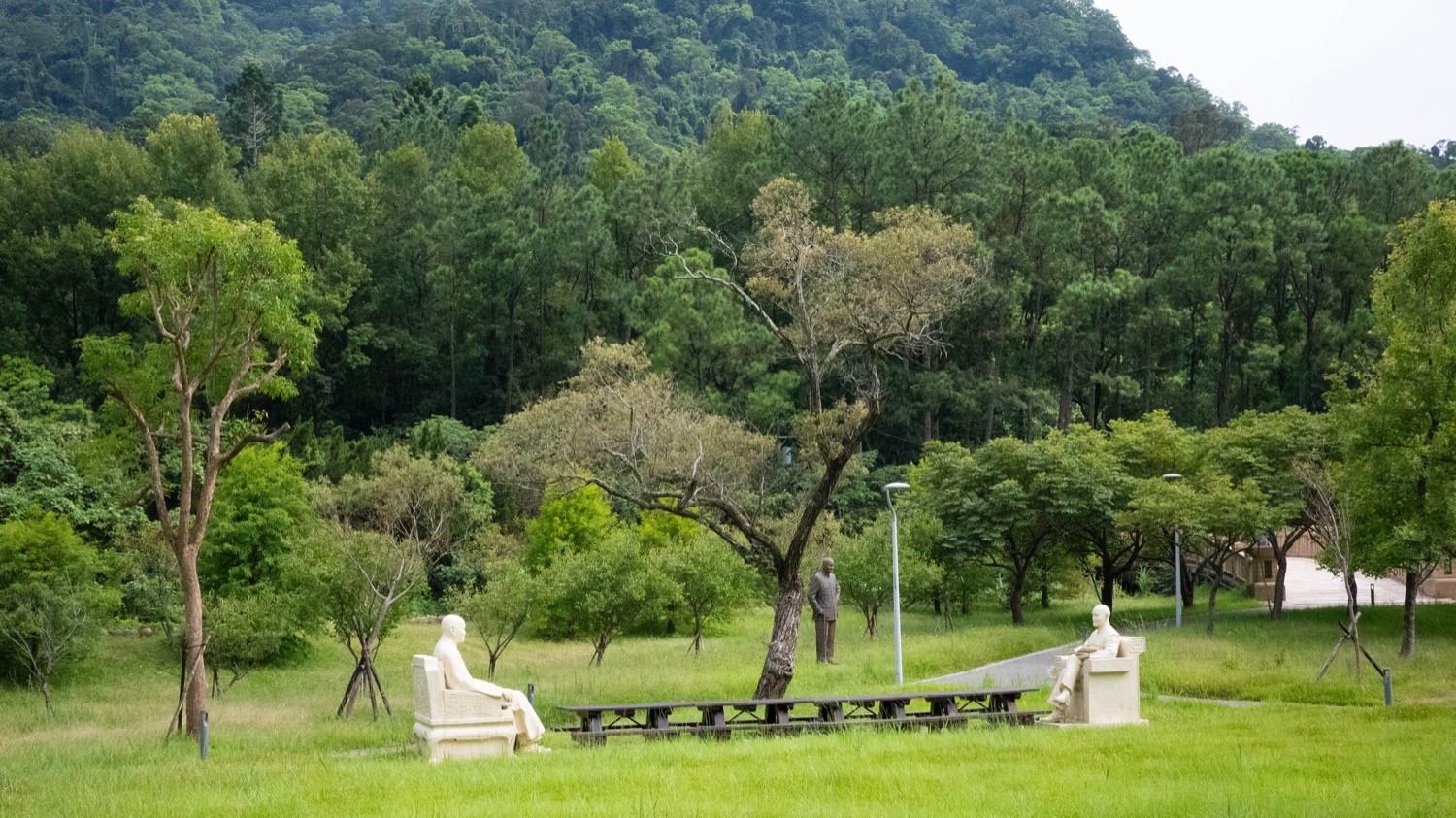
Chiang Kai-shek in Conversation with Himself
What to do with history is a problem.
There is a global discussion about the removal and toppling of statues. What should happen when a public monument no longer represents the values of the society around it (or the values that have been imposed upon it)? Should it be preserved, explained, relocated, destroyed?
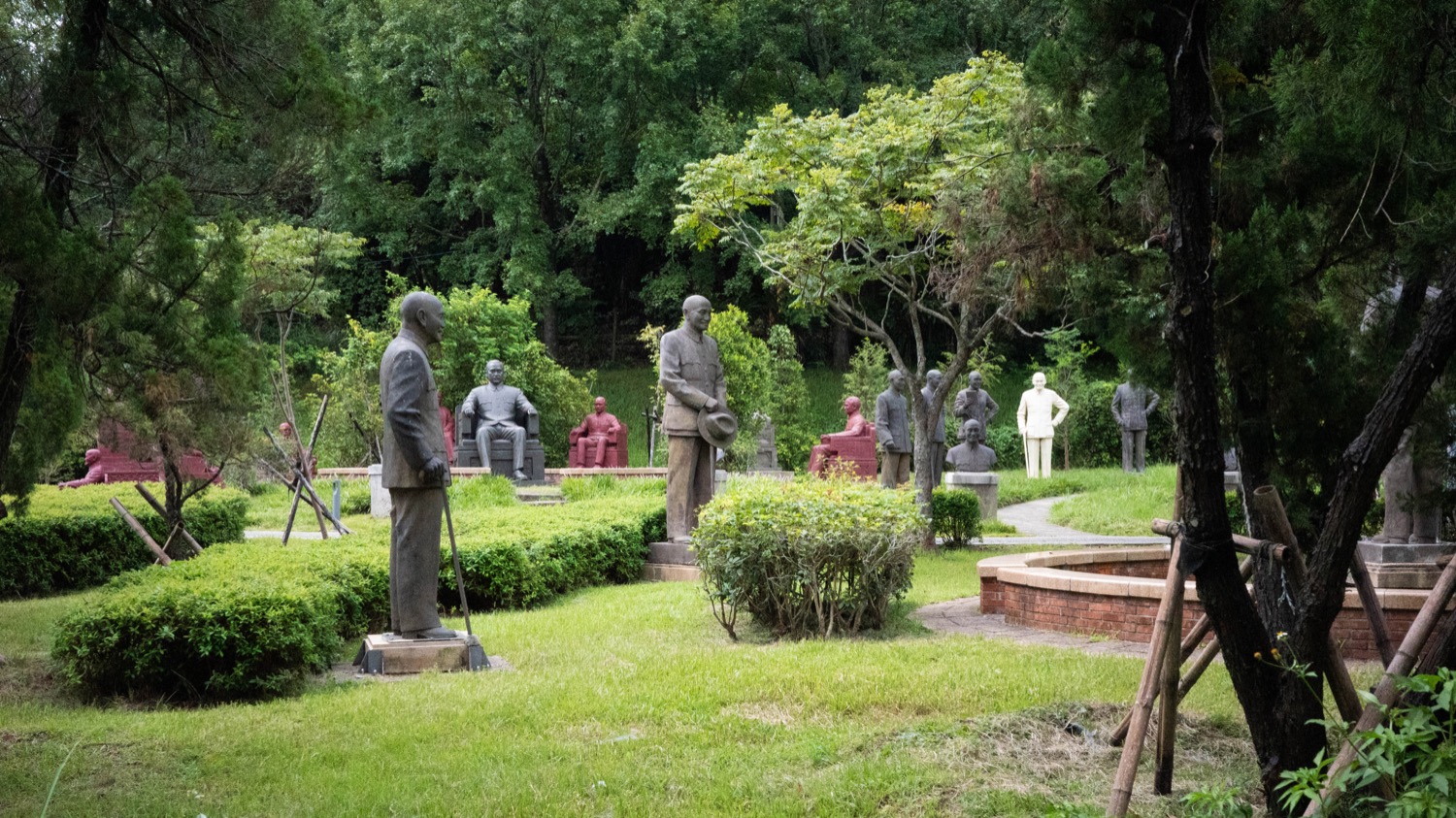
Taiwan has done something particularly interesting with a large number of statues of Chiang Kai-shek. At the Cihu Memorial Sculpture Park near Daxi, Taoyuan, they have been gathered together in a way that embodies two highly contradictory impulses: respect and mockery.
Chiang Kai-shek led the Republic of China for much of the twentieth century. After losing the Chinese Civil War to the Communist Party, his government retreated to Taiwan in 1949. To his supporters, Chiang defended Taiwan from communist rule and laid foundations for its later economic development. To his critics, he was an authoritarian ruler whose government imposed martial law, suppressed political opposition and presided over the White Terror.
These opposing views remain politically active in Taiwan today. Chiang is neither simply a national hero nor a universally rejected dictator. His public memory is still contested.
During the years of Kuomintang one-party rule, statues of Chiang were installed throughout Taiwan: in schools, military bases, government buildings and public spaces. Each statue presented him as the singular figure of authority. He might be standing, seated, reading, smiling or raising one hand in paternal instruction, but the basic message remained the same. Chiang was placed at the centre, while everyone else looked towards him.
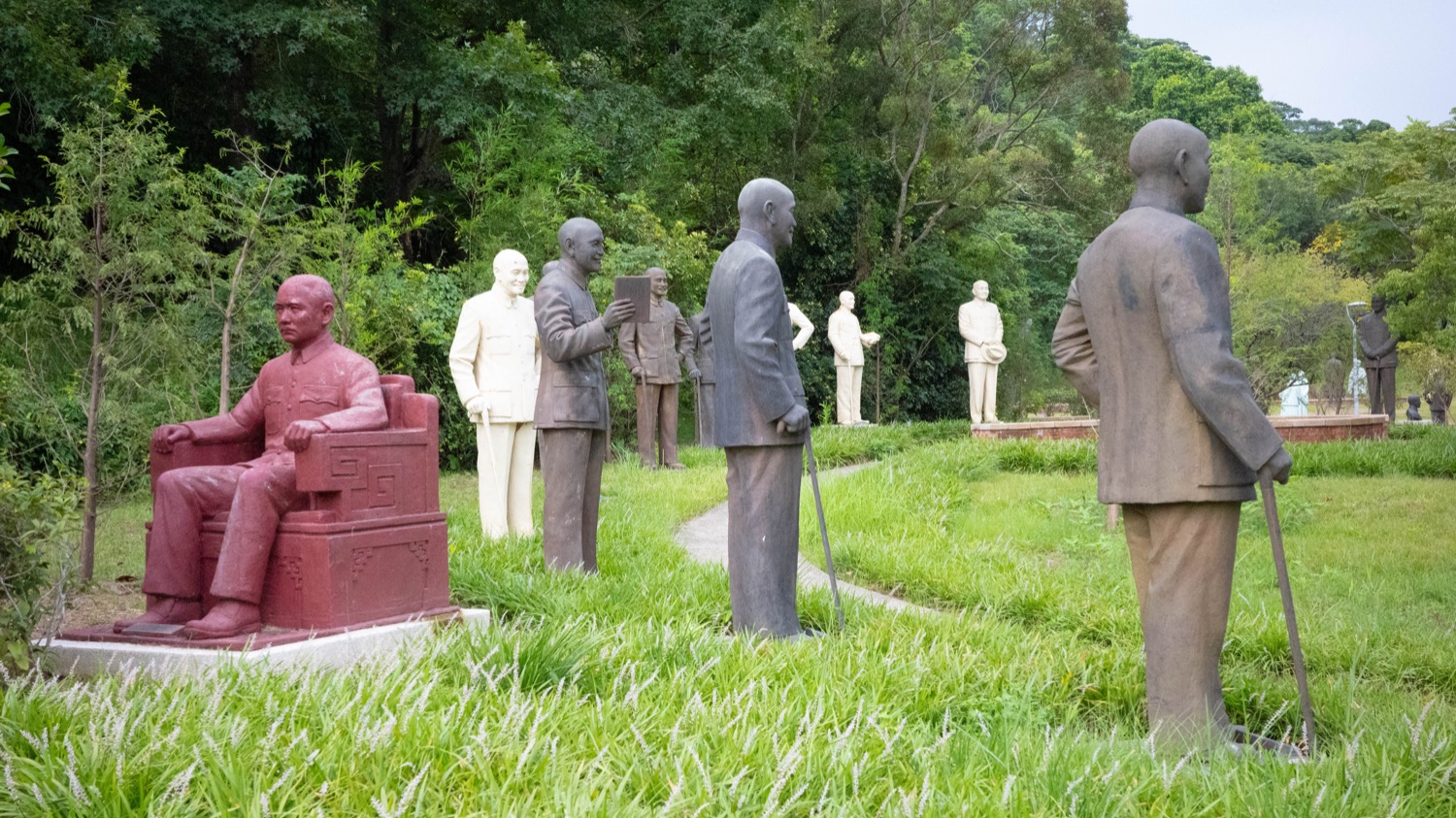
As Taiwan democratised, many of these statues were removed. Rather than destroying them, large numbers were sent to Cihu, a short walk from Chiang’s mausoleum. The sculpture park, founded in the 1990s, now contains a strange population of discarded leaders.
At the burial place, Chiang remains singular. There is one body, one resting place and one historical figure. In the park nearby, he multiplies.
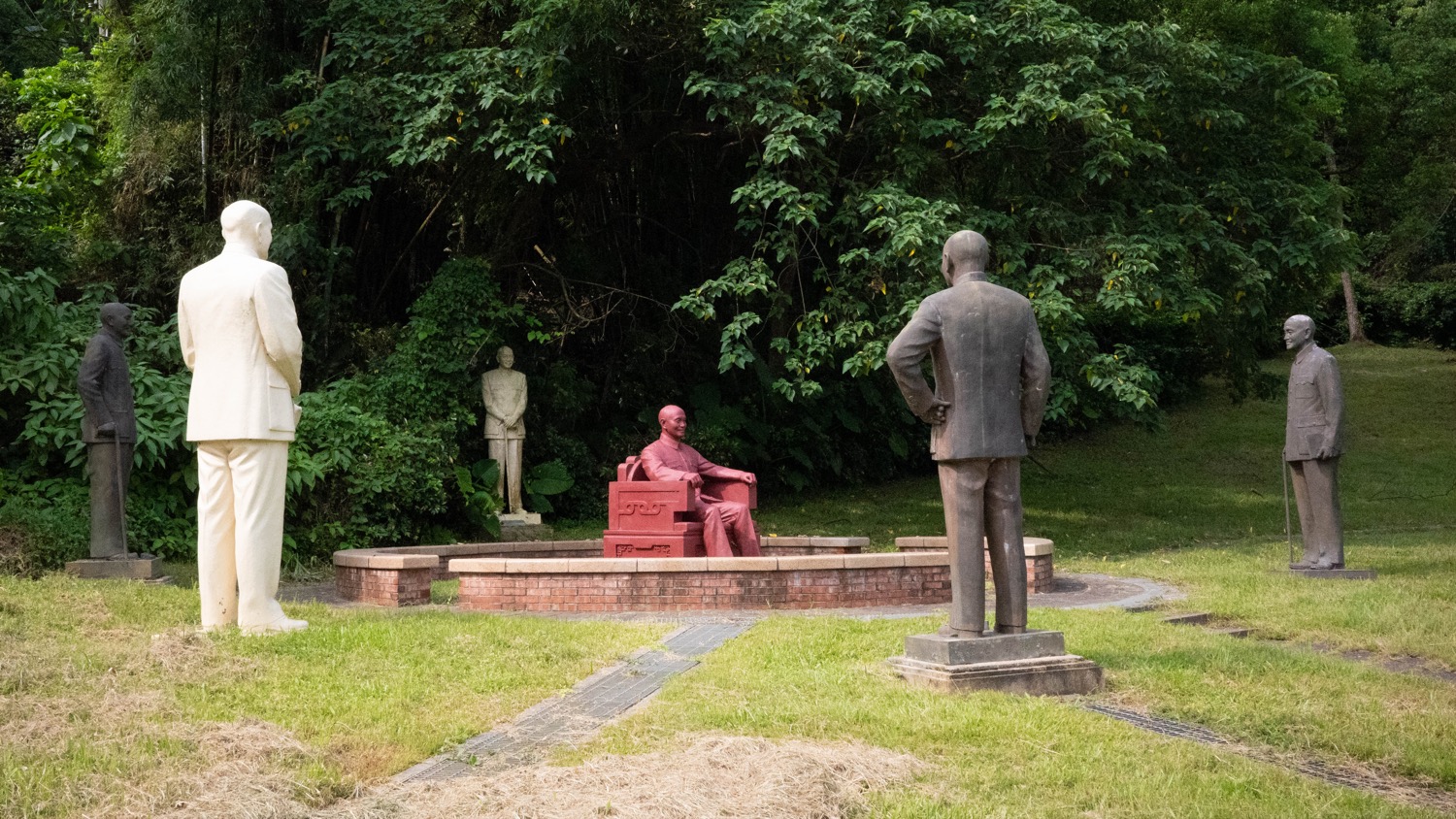
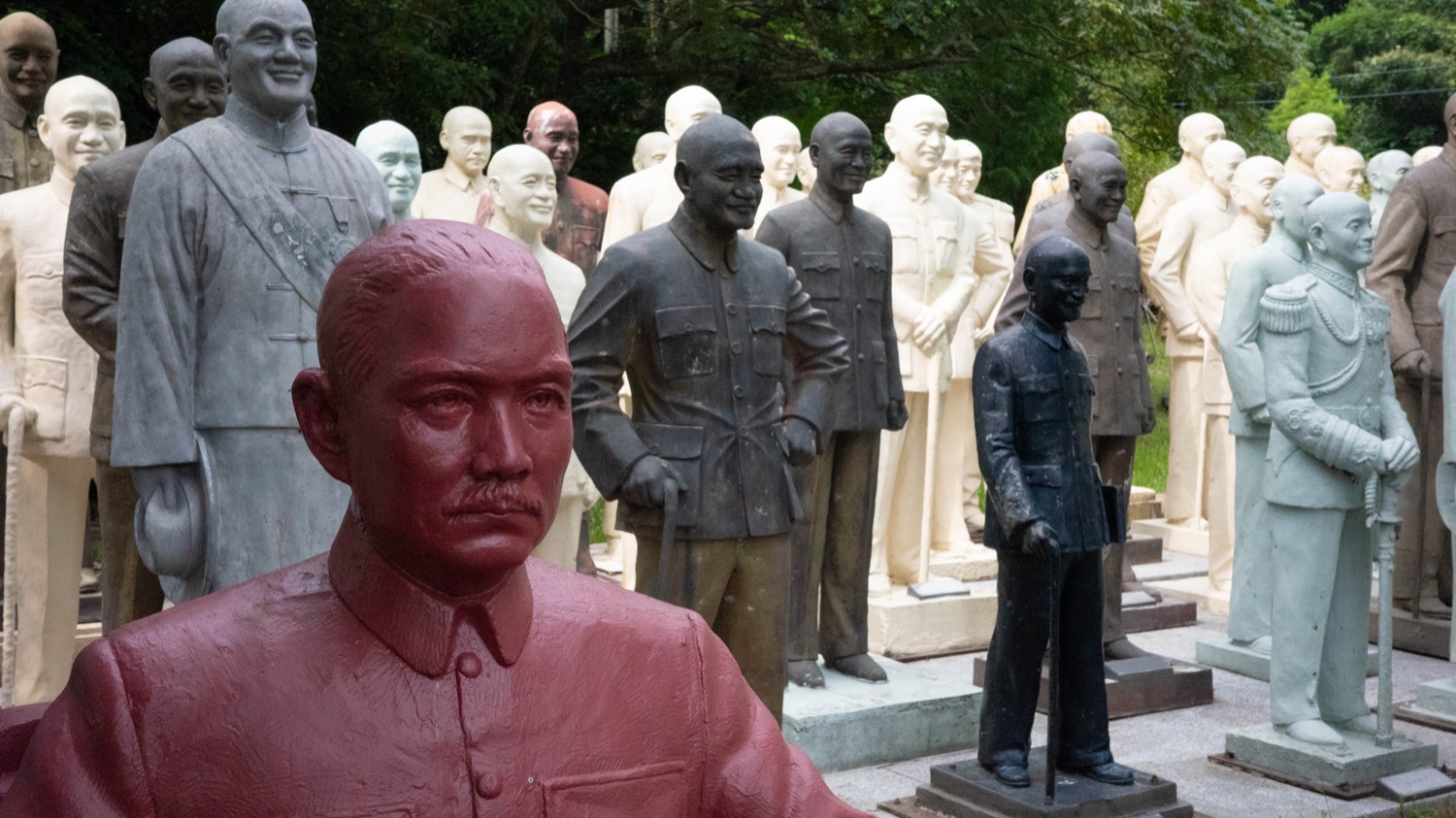
Chiang leads Chiang. Chiang instructs Chiang, and Chiang listens patiently. Chiang sits beside Chiang. Chiang queues behind Chiang and Chiang. The dictator has become his own procession, committee, congregation and audience.
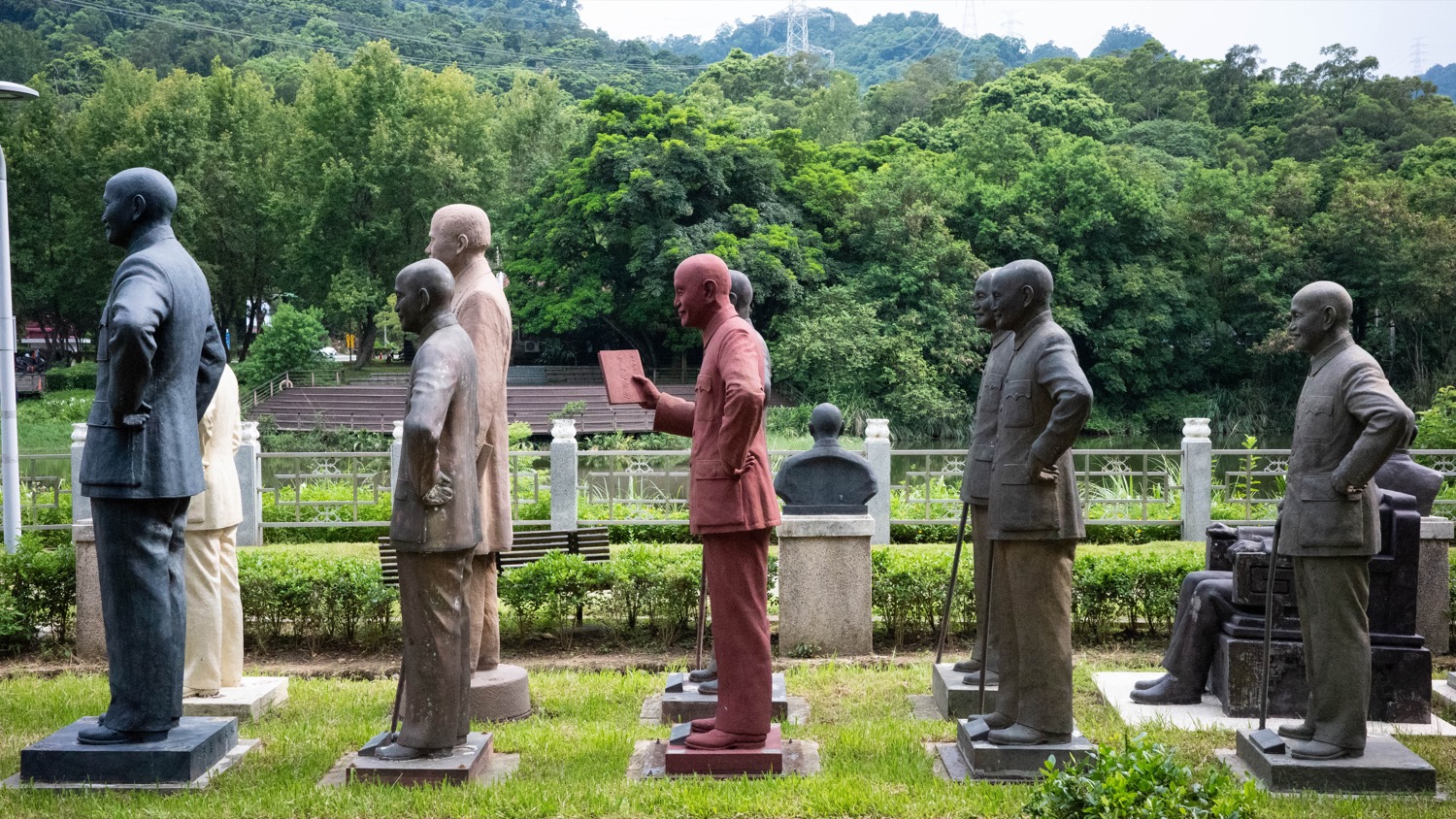
The statues have been treated respectfully. They are preserved, maintained and displayed within a landscape dedicated to Chiang’s memory. The official framing remains largely historical and commemorative.
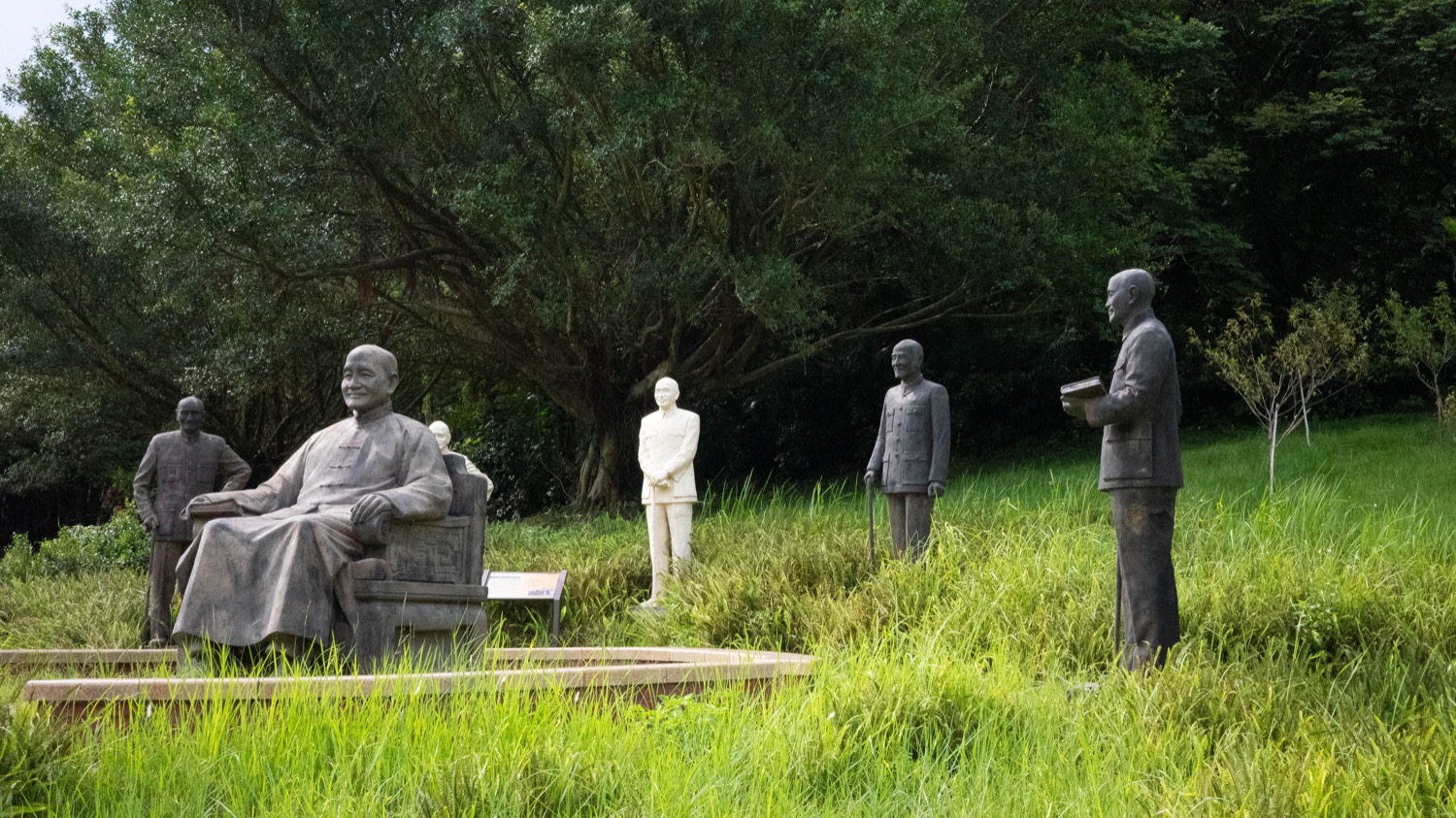
But the placement of the statues—their staging—tells another story. They have been positioned in little groups, competing with each other for attention. The arrangements are knowingly comic. The repetition makes them ridiculous. Chiang becomes his own government, audience, entourage and opposition. This is what makes the park so compelling.
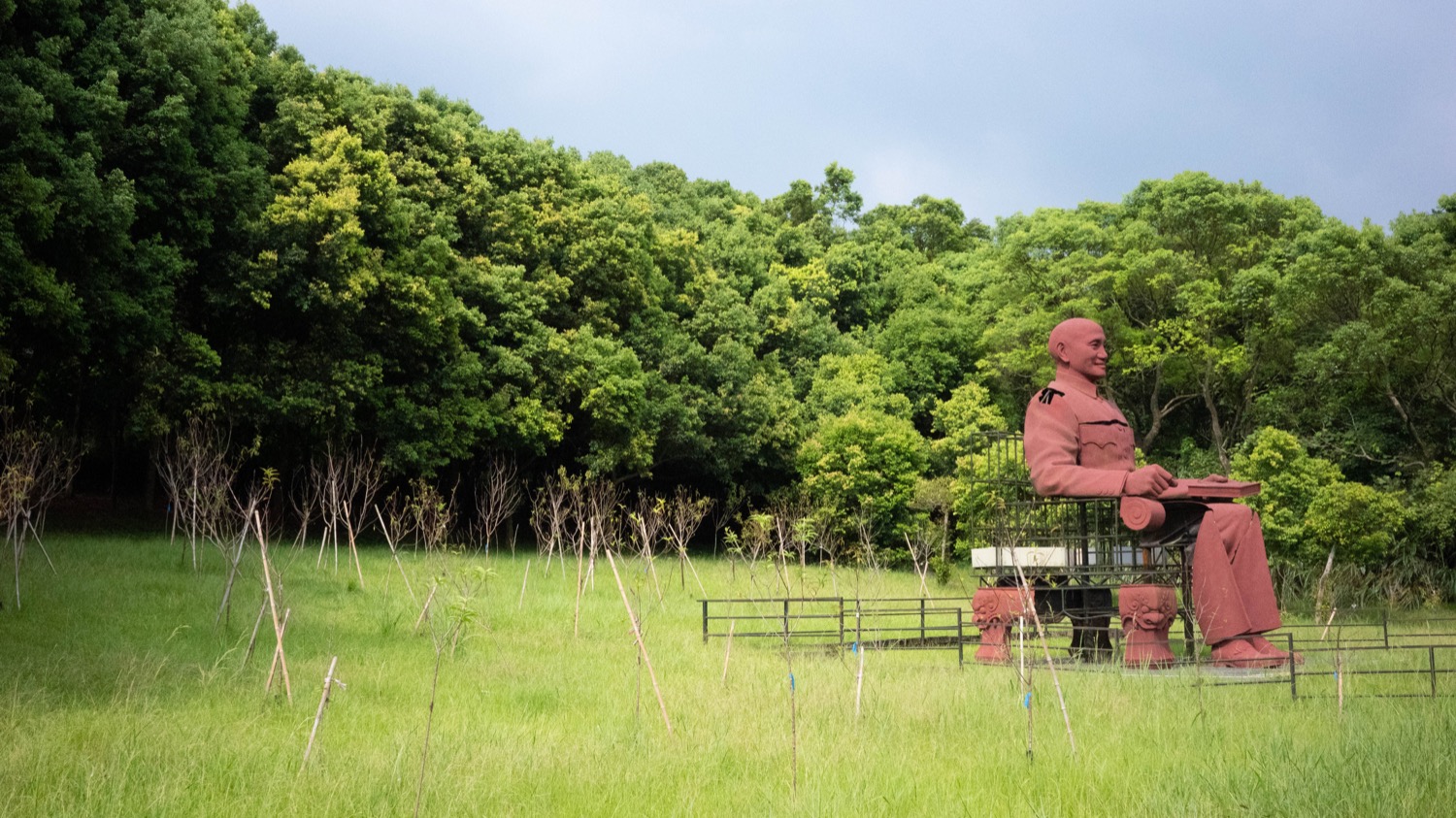
Taiwan has not chosen between preserving Chiang and rejecting him. She has allowed reverence and ridicule next to each other. In this landscape political authority survives as material but loses control over its meaning. The statues remain standing but they no longer tell us where to stand.